The kinds of programs we design
Each program is built around a specific development. Here we describe the types of training contexts we work in and what each one involves.
Training shaped by the nature of the development
The communication skills needed to sell a high-rise apartment in Buenos Aires differ meaningfully from those needed to sell a commercial office floor or a suburban housing development. We design for each context.
High-density urban residential
Urban apartment towers and mid-rise developments in Buenos Aires and major Argentine cities. Buyers in this category range from young professionals purchasing their first property to families upgrading and investors seeking rental yield.
Training focuses on floor plan reading and explanation, amenity communication, building quality arguments, neighborhood positioning and the specific objections that arise around price per square meter and construction timelines.
Low-density and suburban
Gated communities, country clubs, townhouse complexes and suburban housing developments. Buyers here are often making a significant lifestyle decision that involves relocating and changing their daily environment.
Training emphasizes lifestyle storytelling, community value communication, the transition conversation and how to work with buyers who are at an early exploratory stage rather than ready to commit.
Office and corporate space
Class A office buildings and corporate park developments. Buyers and tenants are businesses and investors with sophisticated financial expectations and specific operational requirements.
Training covers investor communication frameworks, yield and valuation conversations, lease structure explanation, building specifications and how to manage multi-stakeholder decision processes.
Retail and mixed-use
Shopping centers, retail strips and mixed-use developments combining residential and commercial components. Buyers include retail operators, investors and in some cases anchor tenants with specific requirements.
Training addresses foot traffic arguments, catchment area analysis communication, co-tenancy value and the distinct conversation dynamics when dealing with commercial operators versus private investors.
What a training engagement actually looks like
Programs vary in duration and intensity depending on team size, project complexity and launch timeline. Here is a representative example of how a program unfolds.
We observe the team in real sales interactions, review existing scripts and materials, and conduct individual interviews to understand each person's communication strengths and gaps. This phase typically takes one to two weeks.
We present a detailed training plan to the developer's management team. The plan includes session topics, learning objectives, role-play scenarios and materials. Adjustments are made based on feedback before delivery begins.
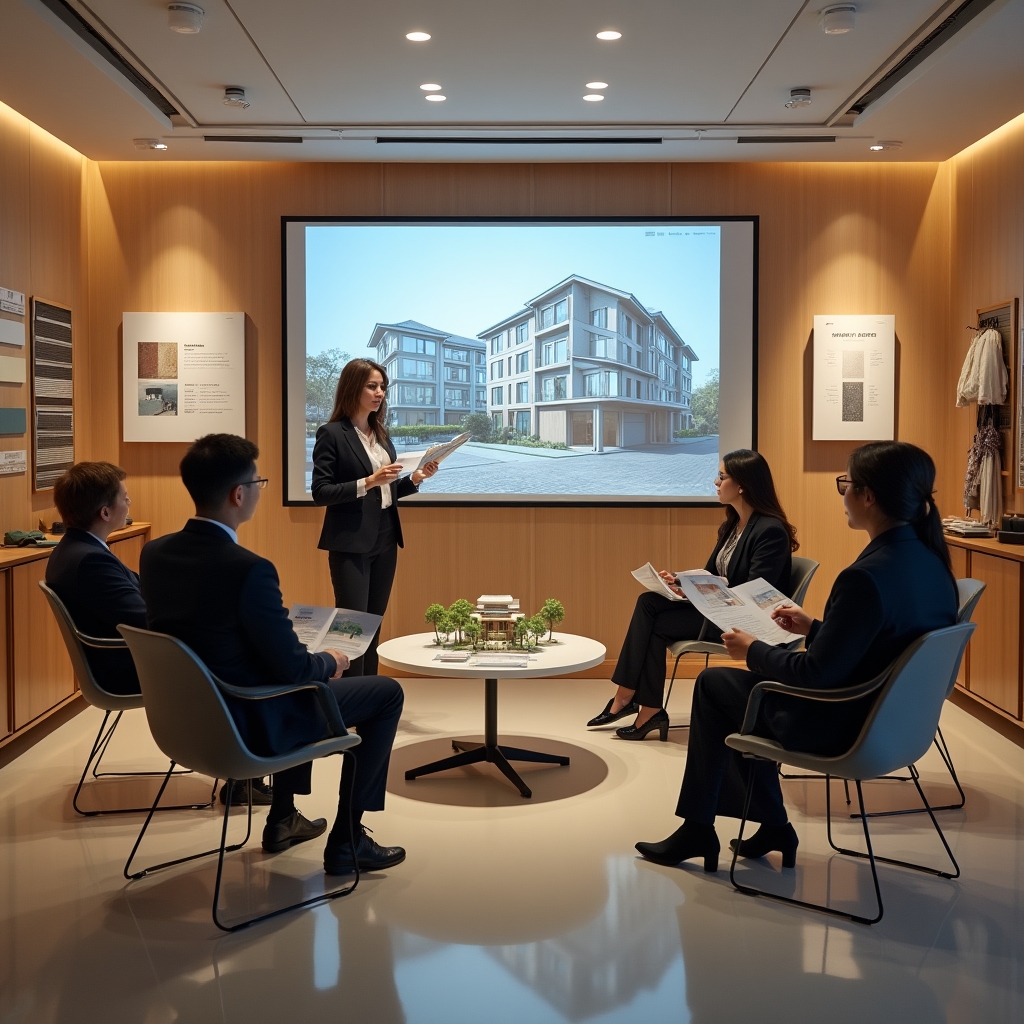
Sessions are typically held at the developer's offices or sales center. Each session runs two to three hours and combines conceptual input with structured practice. Teams work through real buyer scenarios using the actual product they are selling.
After the core program, we schedule follow-up sessions to review how the team is applying the training in real interactions. Reference materials and quick-reference guides are provided for ongoing use.


Interested in a program for your development?
Contact us to discuss your project type, your team and what a training program would involve.
Contact us